Furniture became an investable category the day auction houses gave design its own sales calendar, and the ceiling is documented: Eileen Gray’s “Dragons” armchair sold for 21.9 million euros at the Yves Saint Laurent collection sale at Christie’s in 2009, still the reference record for 20th-century furniture. Below that ceiling sits a structured market with four distinct asset classes, each with its own price drivers, risks and holding horizons. This review maps the four, sets the provenance rules that protect value in all of them, names the three traps that destroy it, and closes with an illustrative model portfolio. One line before the data: this is market analysis, not investment advice. For readers studying how this level of craft appears in current production, Modenese Furniture is a useful reference point for Italian classic furniture, carving, finishes and room-scale collections.
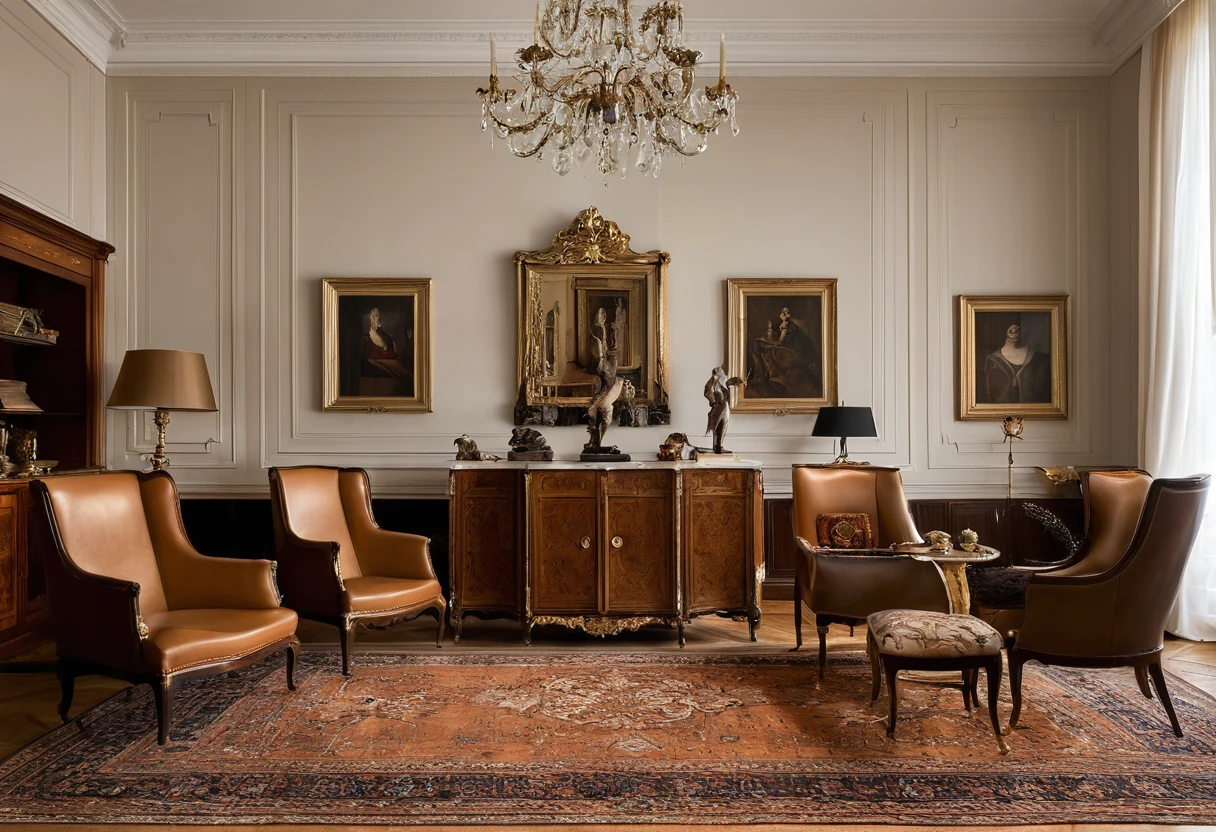
Asset Class 1: Period Antiques (Pre-1850), the Survivor Market
Drivers: absolute scarcity (no more will be made), documented provenance, and museum-grade craftsmanship in woods and techniques now restricted or extinct. The risk history is instructive: mid-grade “brown furniture” lost most of its value between the 1990s and 2010s as tastes turned, while the top few percent, signed, royal-provenance or exhibition-published pieces, held and grew. The class therefore rewards extreme selectivity: one exceptional commode outperforms ten good ones. Horizon: 20 years and up, with low liquidity between auction seasons. Entry discipline: buy through the major houses or vetted dealers, and treat any piece without documented history as decoration, priced accordingly.
Asset Class 2: Signed Modernism (1920-1980), the Institutionalized Market
Drivers: name designers with catalog raisonné scholarship (Gray, Prouvé, Perriand, Royère), design-museum validation, and the deepest auction infrastructure in the category; works by Jean Royère have crossed half a million dollars repeatedly at the major houses. Risks: the class’s success bred its hazards: licensed reissues compress prices of all but verified originals, condition originality (original upholstery, original finish) now moves prices by multiples, and attribution disputes are common enough that paperwork outranks aesthetics. Horizon: 10 to 20 years. Entry discipline: provenance to first sale where possible, and the working rule of the trade: in Eileen Gray‘s class of designer, the document is half the asset.
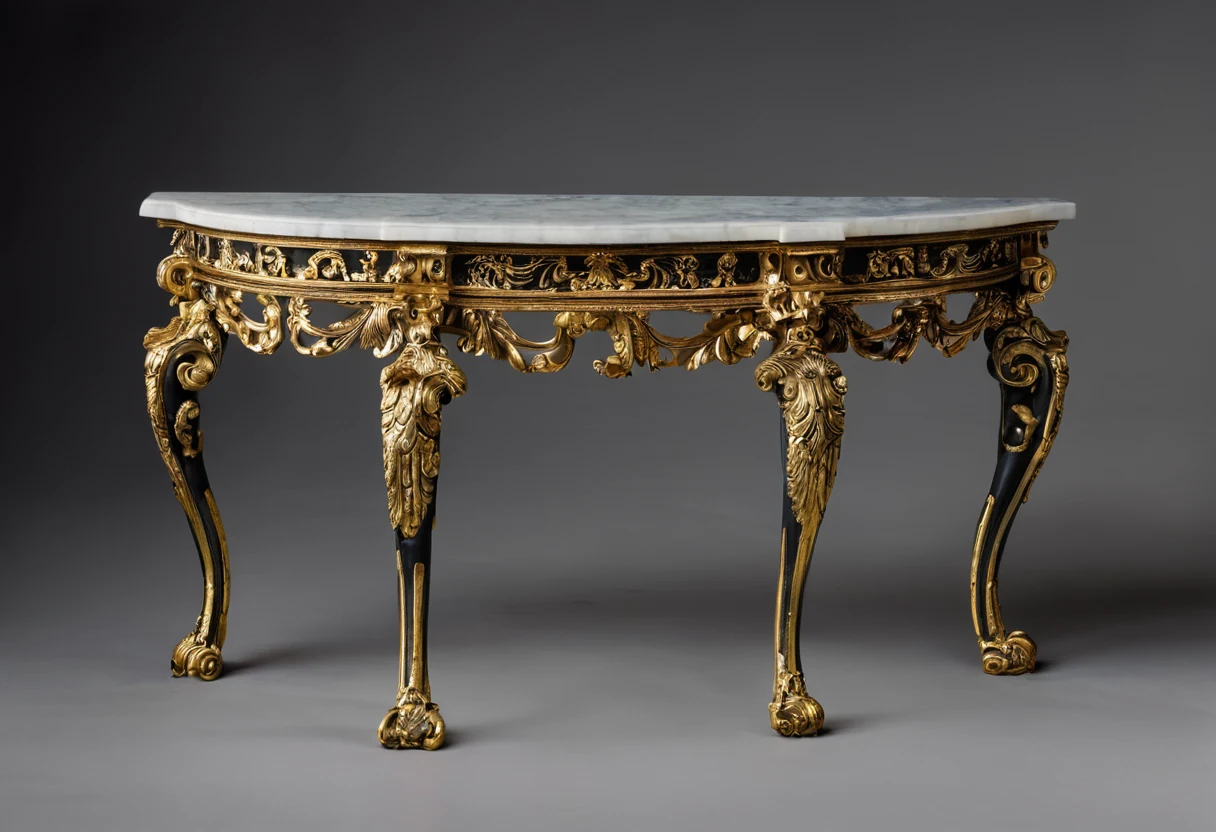
Asset Class 3: Living Craft Luxury, the Scarcity That Is Still Breathing
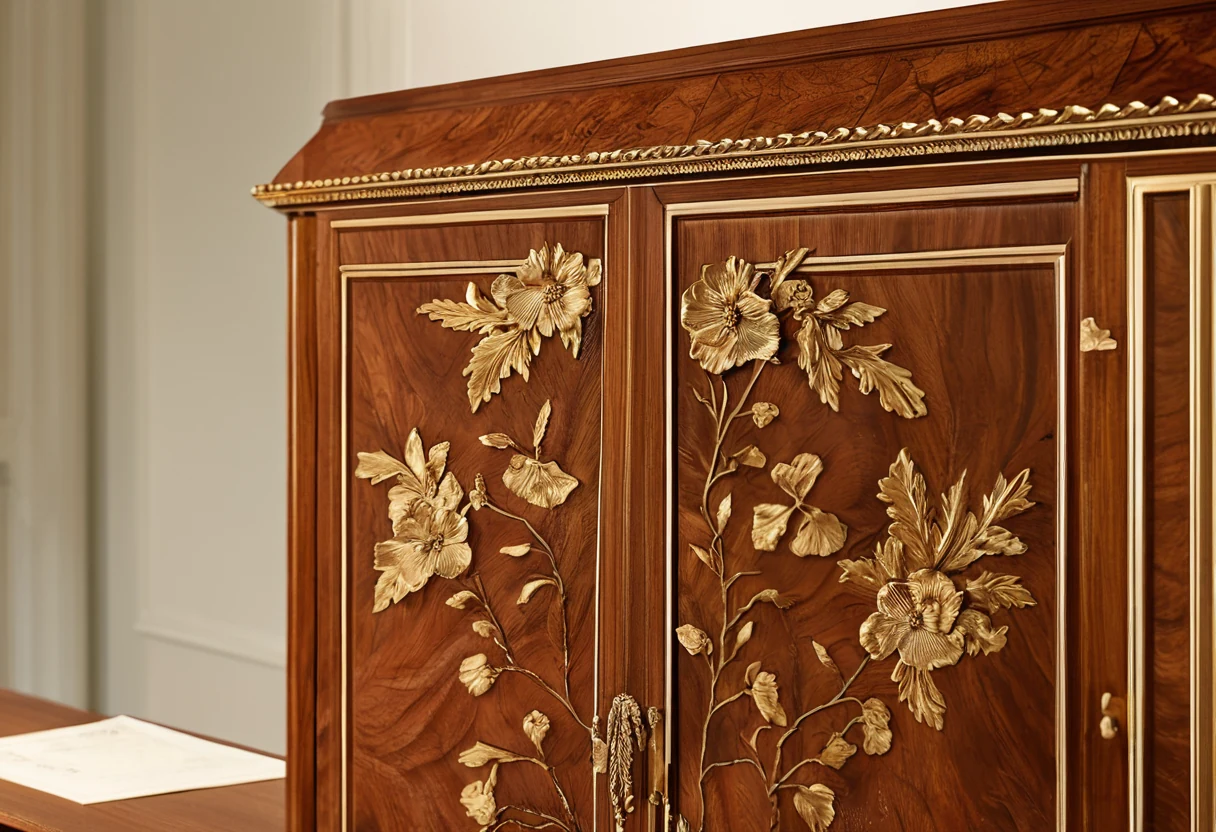
Drivers: this is the contrarian class: museum-grade handwork made now, hand-carved, gilded, marquetry-decorated pieces from recognized workshops. The scarcity driver is demographic rather than historical: master carvers and gilders take a decade to form and their global population is small and aging, so the hours inside such pieces get more expensive every year, a cost floor that rises independent of fashion. Documented production, of the kind ateliers publishing their hand-made furniture lines maintain, gives the class the paper trail classes 1 and 2 taught the market to demand. Risks: the secondary market is young, so resale infrastructure is thinner; value concentrates in workshop reputation, which must outlive the purchase. Horizon: 15 to 30 years, the class bought partly for use, the dividend no security pays. Entry discipline: commission or buy pieces with stated hours, named techniques and full material documentation, and keep every paper.
Asset Class 4: Limited Editions and Collaborations, the High-Beta Corner
Drivers: design-art editions (typically 8 to 20 examples plus proofs) sold through specialist galleries, where artist crossover and edition scarcity produce the category’s fastest appreciation, the Lalanne sculptural-furniture phenomenon being the textbook case of a niche turning into a nine-figure market. Risks: highest fashion sensitivity in furniture, gallery markups that take years to grow past, and dependence on a small collector pool. Horizon: 5 to 15 years, with real drawdown possibility. Entry discipline: primary-market access at fair gallery terms or nothing; paying secondary prices for last decade’s hype is the class’s classic loss.
The Provenance Protocol: Paper Is Half the Price
All four classes converge on one operational rule: provenance is not a romantic extra but the difference between an asset and an anecdote. The working file for each significant piece contains six items:
- Original invoice and any prior sale records (auction lot numbers included).
- Maker documentation: workshop certificates, materials, techniques, stated hours for craft pieces, edition numbers for editions.
- High-resolution photographs at acquisition, updated every 5 years.
- A restoration log: who touched the piece, when, doing what, with the principle “stabilize, never strip” in writing.
- Exhibition and publication history, added as it accrues.
- An insurance appraisal refreshed every 3 to 5 years.
The Three Traps That Erase Furniture Value
- Confusing retail with value. Showroom price includes margin, logistics and brand amortization; most furniture is worth 20 to 50 percent of retail the day after delivery, and only documented pieces from the four classes climb back. Buying “investment furniture” at full undocumented retail is negative equity with cushions.
- Over-restoration. The antiques trade’s oldest arithmetic: stripping original finish and patina can halve a period piece’s value in one well-intentioned week. Conservation stabilizes; restoration, where unavoidable, is documented and reversible.
- Neglecting the physical asset. Wood and textiles hold value at 45 to 55 percent relative humidity, away from direct sun and heat sources; a cracked veneer or UV-bleached show cover is a permanent markdown that storage discipline would have prevented for the cost of a hygrometer.
An Illustrative 200,000-Euro Model Portfolio
For a collector entering deliberately rather than romantically, one defensible allocation of a notional 200,000 euros (illustrative, not advice) reads as follows. 40 percent (€80,000): one signed modernist piece with first-sale provenance, the portfolio’s liquidity anchor. 25 percent (€50,000): one or two truly exceptional period pieces bought against the taste cycle while the broad antique market remains soft. 25 percent (€50,000): a commissioned living-craft masterpiece with full documentation, the appreciating-cost-floor position the household also gets to use. 10 percent (€20,000): one edition piece at primary-market terms, the high-beta satellite. The allocation’s logic mirrors any portfolio’s: one liquid core, one contrarian value position, one rising-cost real asset, one growth bet, except that this portfolio also furnishes the drawing room while it works.
The honest summary of furniture as an asset class fits in two sentences. Most furniture is consumption, and the four classes above are the documented exceptions where scarcity, scholarship or dying skills put a floor under value and sometimes a slope above it. The collector’s edge is unglamorous: paperwork, humidity and patience, the same three things the trade has rewarded for three hundred years.